


-
- Global AMC MENU
- NEWS
- HEALTH
- PEOPLE
- Introduction


Professor Ho Joon Im’s Team Achieves a 94 Percent Treatment Success Rate Using Half Matched Family Donors
“Hope for a Cure for Pediatric and Adolescent Aplastic Anemia Patients Who Previously Could Not Receive Treatment Due to Lack of Suitable Donors”
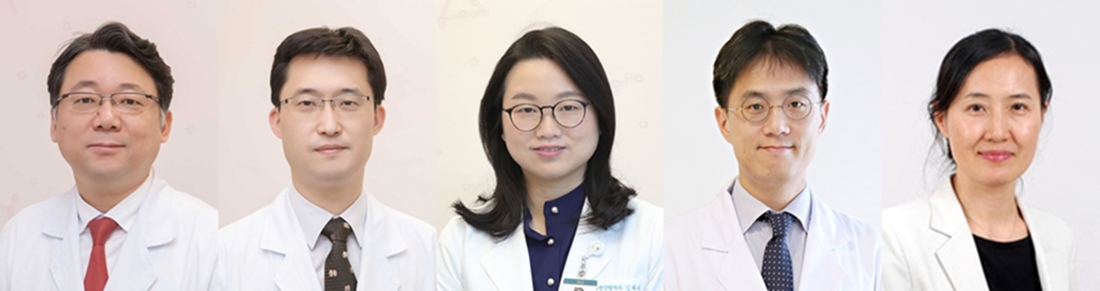
▲ (From left) Professors Ho Joon Im, Kyung-Nam Koh, Hyery Kim, Sung Han Kang from the Division of Pediatric Hematology and Oncology, and specialist nurse Eun Seok Choi at Asan Medical Center.
Aplastic anemia is a condition in which bone marrow function is impaired, leading to a deficiency of white blood cells, red blood cells, and platelets, which can cause severe infections, anemia, and bleeding. While hematopoietic stem cell transplantation is the only curative treatment, many pediatric and adolescent patients cannot find a fully matched family or unrelated donor.
For these patients, alternative treatments such as immunosuppressive therapy have been used, but achieving a complete cure has been difficult. Recently, however, a domestic research team reported study results showing that haploidentical hematopoietic stem cell transplantation can be used as a first-line treatment for pediatric and adolescent patients who could not receive a transplant due to the absence of a suitable donor.
The Division of Pediatric Hematology and Oncology Transplantation Team at Asan Medical Center, including Professors Ho Joon Im, Kyung-Nam Koh, Hyery Kim, Sung Han Kang, and specialist nurse Eun Seok Choi, recently announced that they achieved a 94 percent treatment success rate when pediatric and adolescent aplastic anemia patients received haploidentical hematopoietic stem cell transplantation from family donors who were only half-matched.
This study is regarded as a landmark achievement, as it is the first in the world to demonstrate that haploidentical hematopoietic stem cell transplantation can be implemented as a first-line treatment for pediatric and adolescent patients with aplastic anemia who lack a suitable donor.
If left untreated, aplastic anemia not only makes normal daily life impossible but can also be life-threatening. Hematopoietic stem cell transplantation can restore damaged bone marrow function to a healthy state, making a complete cure possible. To proceed with transplantation, however, securing a donor who can provide hematopoietic stem cells is essential.
For pediatric and adolescent patients with aplastic anemia who secure a fully matched donor, hematopoietic stem cell transplantation as a first-line treatment has been established as the standard of care.
However, in Korea, only about one in ten pediatric and adolescent patients in need of hematopoietic stem cell transplantation are able to find an HLA-matched sibling donor. Even when unrelated donors are included, an estimated 40 to 50 percent of pediatric and adolescent patients are still unable to secure a suitable donor.
When a suitable donor cannot be secured, immunosuppressive therapy may be used as a first-line treatment. However, its success rate is relatively low, and in many cases the therapeutic effect is not sustained. Patients who do not respond to immunosuppressive therapy must undergo regular red blood cell or platelet transfusions and rely on prophylactic antibiotics. In the event of infection, immediate antibiotic treatment is required as part of daily life management.
Haploidentical family donors, including parents, siblings, and children who share only half of the HLA match, are relatively easier to secure and have therefore drawn attention as important alternative donors. In clinical practice, when no suitable HLA-matched donor is available and the patient fails to respond to immunosuppressive therapy, a haploidentical family donor is considered a realistic alternative. The hematopoietic stem cell transplantation team at Asan Medical Center has previously performed haploidentical stem cell transplantation in such patients and reported successful treatment outcomes.
However, haploidentical hematopoietic stem cell transplantation carries a risk of severe chronic graft-versus-host disease after transplantation, which can cause significant impairment in daily life for pediatric and adolescent patients and, in some cases, be life-threatening. For this reason, a cautious approach has been required when considering haploidentical transplantation as a first-line treatment.
In particular, there have been very few clinical studies worldwide in which haploidentical hematopoietic stem cell transplantation was used as a first-line treatment for pediatric and adolescent patients with aplastic anemia, underscoring the need for robust clinical evidence.
The research team analyzed outcomes after administering haploidentical hematopoietic stem cell transplantation as a first-line treatment to 37 pediatric and adolescent patients with aplastic anemia at Asan Medical Center between December 2015 and July 2024.
As a result, 35 of the treated patients achieved a complete cure and are now leading normal daily lives. Notably, no cases of severe chronic graft-versus-host disease were observed. In addition, neutrophil engraftment occurred rapidly at an average of 10 days after transplantation, and the overall treatment success rate reached 94 percent.
 \
\
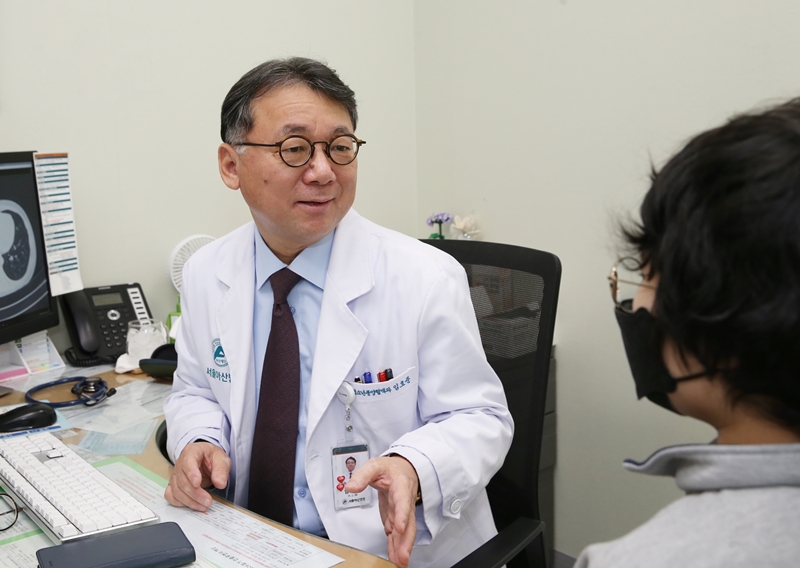
▲ Professor Ho Joon Im of the Division of Pediatric Hematology and Oncology at Asan Medical Center is providing medical care to a pediatric patient with aplastic anemia who received haploidentical hematopoietic stem cell transplantation from a family donor.
Professor Ho Joon Im of the Division of Pediatric Hematology and Oncology at Asan Medical Center said, “With continued advances in haploidentical hematopoietic stem cell transplantation, it is most rewarding to see pediatric and adolescent patients with aplastic anemia who previously could not receive treatment due to the lack of a donor now regain a healthy life.”
He added, “This study is particularly meaningful in that it provides important evidence supporting haploidentical hematopoietic stem cell transplantation as a first-line treatment. We hope that further advances in stem cell transplantation techniques will continue to open the path to a complete cure for pediatric and adolescent patients with aplastic anemia.”
The results of this study were recently published in ‘Transplantation and Cellular Therapy’, a globally renowned international journal in the field of hematopoietic stem cell transplantation, with an impact factor of 4.4.
ASAN MEDICAL CENTER
BROCHURE DOWNLOAD
Sharing your hope
ASAN MEDICAL CENTER
