


-
- Global AMC MENU
- NEWS
- HEALTH
- PEOPLE
- Introduction


Electrode Twisting During Cochlear Implantation Attributed to Specific Anatomical Structures
A research team led by Professor Hong Ju Park of Asan Medical Center emphasized the need for customized surgical planning through preoperative ear CT analysis
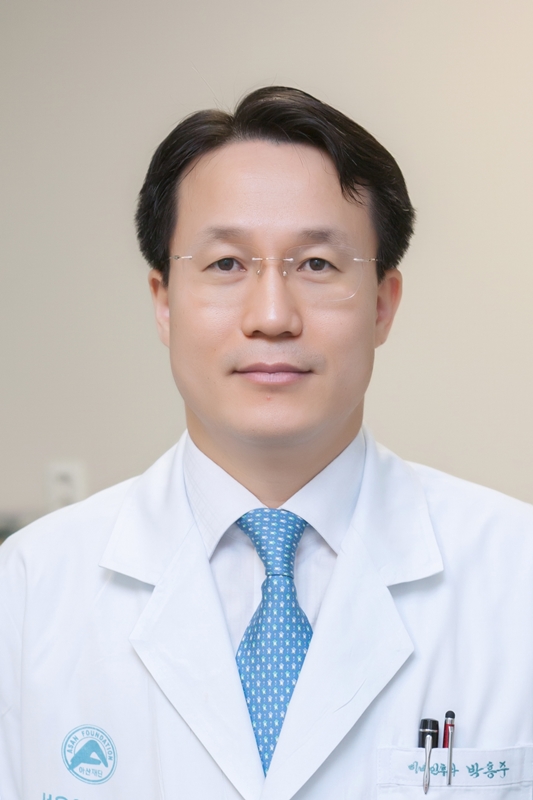
▲ Professor Hong Ju Park of the Department of Otorhinolaryngology-Head and Neck Surgery at Asan Medical Center
Cochlear implantation is a treatment for patients with severe hearing loss who do not benefit from hearing aids. The procedure involves inserting electrodes into the cochlea to stimulate the auditory nerve, enabling sound perception. In recent years, advanced cochlear implant devices have been developed to place electrodes closer to the auditory nerve, allowing for improved hearing outcomes. However, in rare cases, a complication in which the electrodes become twisted during surgery has been reported.
A research team in Korea has proposed a method to predict the risk of electrode twisting in advance, enabling surgeons to establish patient specific and customized surgical strategies before the procedure.
A research team led by Professor Hong Ju Park of the Department of Otorhinolaryngology-Head and Neck Surgery at Asan Medical Center analyzed temporal bone CT images of 239 adult patients who underwent cochlear implantation with electrodes placed close to the auditory nerve.
The analysis showed that patients who experienced electrode twisting during surgery shared anatomical characteristics in which the basal turn of the cochlea, the outermost and largest turn of the cochlea, and the facial nerve were structured in a way that made electrode twisting more likely to occur.
Based on these findings, the study suggests that to prevent electrode twisting, high risk patients should be identified in advance through preoperative CT imaging, and customized surgical techniques should be applied according to each patient’s anatomical characteristics.
The most common treatment for hearing loss is auditory rehabilitation using hearing aids. However, when hearing loss worsens with age, or when severe hearing impairment occurs due to sudden sensorineural hearing loss or otitis media, understanding speech can remain difficult even with hearing aids. In such cases, cochlear implantation is performed. Even for patients who do not benefit from hearing aids, cochlear implants can enable successful auditory rehabilitation.
The development of cochlear implant devices is also progressing steadily. The recently developed slim modiolar electrode, or SME, is designed to position the electrode closer to the nerve located at the center of the cochlea, known as the modiolus, compared with conventional devices. This design allows electrical signals to be delivered more precisely. In addition, the SME is thinner and more flexible than previous electrodes, enabling insertion with less trauma to the cochlea.
However, a drawback of cochlear implant systems using these newer electrodes is that, although rare, electrode twisting can occur during surgery, and the exact mechanism underlying this complication has not yet been clearly identified.
The research team analyzed preoperative temporal bone CT images of 239 patients who underwent cochlear implantation with slim modiolar electrodes at Asan Medical Center between 2018 and 2023.
The analysis showed that in patients who experienced electrode twisting, the plane of the cochlear base, defined as the horizontal line of the basal turn of the cochlea, was positioned more medially than the facial nerve, while the facial nerve was located relatively lateral to the cochlear base. As a result, the tip of the electrode was more likely to contact the floor of the middle ear cavity during insertion, increasing the risk of complications.
The research team emphasized that to improve the safety and success rate of cochlear implantation, it is essential to adopt tailored surgical approaches for patients with anatomically high risk structures. This includes facilitating electrode insertion by removing specific areas of bone when necessary, and adjusting the direction and speed of electrode insertion as well as the selection of surgical instruments in accordance with each patient’s anatomical characteristics.
Professor Hong Ju Park of the Department of Otorhinolaryngology-Head and Neck Surgery at Asan Medical Center stated, “Cochlear implantation is generally a safe procedure with few major issues. However, with recently developed cochlear implant devices, rare cases of electrode twisting during surgery have been reported. Although equipment to monitor such complications intraoperatively has recently been introduced, this study is particularly meaningful in that it identifies a fundamental approach to preventing these complications in the first place.”
He added, “As people age and their hearing declines, even mild background noise can make it difficult to understand speech, leading to communication difficulties and a higher risk of social isolation. Over the long term, hearing loss can also be associated with dementia. For this reason, individuals who experience discomfort in daily life due to hearing loss should first consider using hearing aids. If adequate communication remains difficult despite hearing aids, we recommend actively treating hearing loss through cochlear implantation.”
The study was published in the latest issue of ‘Otology and Neurotology’, the official journal of the American Otological Society, which specializes in research on ear disorders such as hearing loss and dizziness.
ASAN MEDICAL CENTER
BROCHURE DOWNLOAD
Sharing your hope
ASAN MEDICAL CENTER
