


-
- Global AMC MENU
- NEWS
- HEALTH
- PEOPLE
- Introduction


Sequential Transplantation of Mother’s Liver and Hematopoietic Stem Cells Achieves Immune Tolerance in Child with Advanced Liver Cirrhosis, a First in Korea
Professor Hyery Kim of the Division of Pediatric Hematology and Oncology said, “We hope this treatment case will offer new hope to children suffering from rare and intractable diseases.”
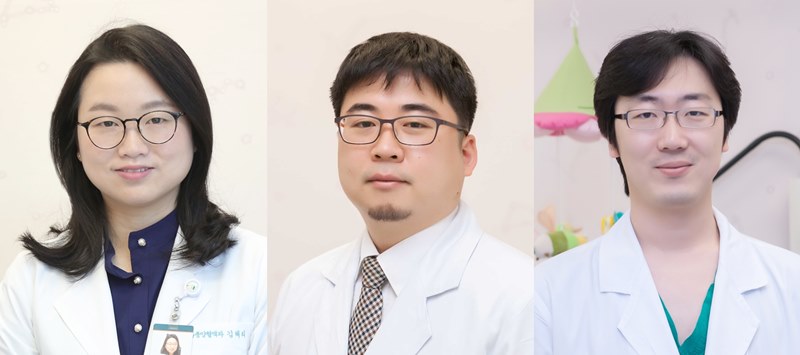
▲ (From left) Professor Hyery Kim of the Division of Pediatric Hematology and Oncology, Professor Seak Hee Oh of the Department of Pediatrics, and Professor Jung-Man Namgoong of the Division of Pediatric Surgery at Asan Medical Center.
“Now I can run and play freely without taking any medication.” After an eight year battle with hypereosinophilic syndrome, a rare and intractable disease, Eunseo Yoo, a 13 year old girl, has regained a healthy and ordinary daily life without the need for immunosuppressive therapy. Her recovery was made possible through a novel treatment approach involving the sequential transplantation of her mother’s liver followed by hematopoietic stem cells, successfully establishing immune tolerance and long term disease control.
A multidisciplinary team at Asan Medical Center led by Professor Hyery Kim of the Division of Pediatric Hematology and Oncology, Professor Seak Hee Oh of the Department of Pediatrics, and Professor Jung-Man Namgoong of the Division of Pediatric Surgery recently announced that they have successfully induced immune tolerance in Eunseo, a pediatric patient whose hypereosinophilic syndrome had progressed to liver cirrhosis. The team sequentially transplanted the mother’s liver followed by haploidentical hematopoietic stem cells. As a result, the patient was able to completely discontinue immunosuppressive therapy while maintaining normal liver function and stable hematopoietic function, marking a significant clinical achievement in immune tolerance induction.
Hypereosinophilic syndrome is a disorder in which eosinophils, a type of white blood cell, proliferate abnormally in the bloodstream and attack major organs. In Eunseo’s case, the eosinophils primarily targeted the liver, leading to liver cirrhosis characterized by progressive hardening of liver tissue and eventual liver failure, making liver transplantation unavoidable.
While there have been a few domestic reports of immune tolerance induced through sequential liver and hematopoietic stem cell transplantation in adult patients, successful outcomes in pediatric patients are exceedingly rare. This is particularly true for children with rare and intractable diseases such as hypereosinophilic syndrome, whose immune systems are more complex and who face a higher risk of post transplant complications. As the first such case reported in Korea, this achievement is also regarded as an extremely rare milestone worldwide.
The immune system normally recognizes a transplanted organ as a foreign invader and mounts an attack, which is why transplant recipients must take immunosuppressive drugs for life to prevent rejection. In this case, however, hematopoietic stem cells from the same donor were transplanted after the liver transplant, fundamentally reconstituting the patient’s immune system. This approach enabled both curative treatment of the underlying intractable disease and the successful induction of immune tolerance, underscoring the significant clinical implications of the therapy.
Eunseo was diagnosed with hypereosinophilic syndrome in 2017 and endured a long and difficult course of treatment, including multiple surgeries such as the creation of an ileostomy following small bowel perforation. The persistently abnormal proliferation of eosinophils continued to damage her liver, ultimately progressing to liver cirrhosis. In 2023, she experienced esophageal variceal bleeding, and in 2024, she developed ascites, both complications of liver failure. As her condition worsened, liver transplantation became unavoidable.
However, because the underlying cause of the disease lay in abnormalities of the bone marrow that produced eosinophils, liver transplantation alone was insufficient to achieve a cure. Accordingly, the medical team transplanted the mother’s liver in August 2024 and subsequently performed a haploidentical peripheral blood stem cell transplant from the same donor, the patient’s mother, in February 2025.
Sequential transplantation of both the liver and hematopoietic stem cells from the same donor carries critical immunological significance. The newly reconstituted immune system derived from the mother’s hematopoietic stem cells comes to recognize the previously transplanted maternal liver not as a foreign organ, but as self. As a result, immune cells no longer attack the transplanted organ, establishing a state of immune tolerance. This allowed the patient to completely discontinue lifelong immunosuppressive therapy, marking a transformative outcome for transplantation medicine.
Eunseo’s mother, identified as Ms Park (under an assumed name), said, “Before and after taking immunosuppressive medication, Eunseo had to fast, which was especially heartbreaking when she could not freely enjoy snacks with her friends. Now it feels like a dream that she can run and play and eat whatever she wants at any time without medication. I am sincerely grateful to the medical team for giving Eunseo the gift of a healthy future.”
Eunseo completely discontinued immunosuppressive therapy in October 2025, and a recent liver biopsy confirmed normal findings. Notably, complete donor chimerism was identified, meaning that 100 percent of her blood cells have been replaced by her mother’s cells. This complete state indicates that abnormal eosinophils are no longer being produced.
Professor Hyery Kim of the Division of Pediatric Hematology and Oncology at Asan Medical Center said, “This case, in which both curative treatment of a rare and intractable disease and the induction of post-transplantation immune tolerance were achieved through sequential liver and hematopoietic stem cell transplantation, may offer new hope to children suffering from similar conditions.”
ASAN MEDICAL CENTER
BROCHURE DOWNLOAD
Sharing your hope
ASAN MEDICAL CENTER
