


-
- Global AMC MENU
- NEWS
- HEALTH
- PEOPLE
- Introduction


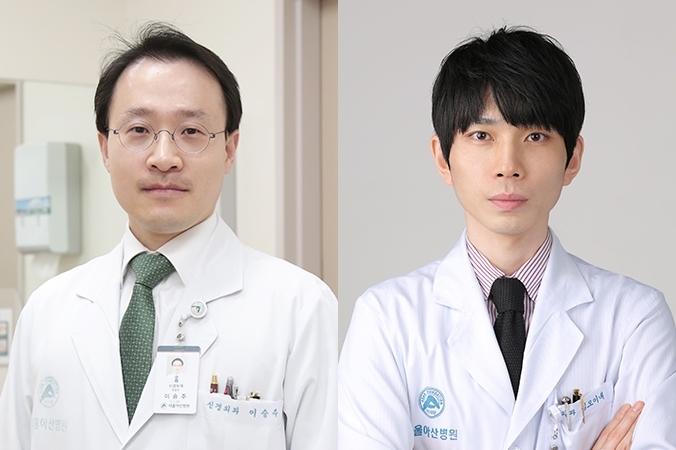
▲ (From left) Professors Seungjoo Lee and Moinay Kim from the Department of Neurosurgery at Asan Medical Center
When the body experiences major trauma or illness, the adrenal glands secrete cortisol to help maintain blood pressure and regulate inflammation. However, when the hypothalamic pituitary adrenal (HPA) axis does not function adequately, cortisol may not be produced or may fail to act effectively, resulting in a condition known as critical illness related corticosteroid insufficiency (CIRCI). This condition can present with nonspecific symptoms such as hypotension and fever, and if left untreated, it can increase the risk of mortality. Despite its clinical significance, there has been limited research on the incidence and implications of CIRCI in neurosurgical patients.
A research team led by Professors Seungjoo Lee and Moinay Kim from the Department of Neurosurgery at Asan Medical Center reported findings on the incidence of CIRCI and the clinical effects of steroid treatment in patients who underwent surgery for acute intracerebral hemorrhage. The team conducted a prospective multicenter study involving 255 patients who underwent surgery for acute intracerebral hemorrhage across eight neuro intensive care units in Korea between 2020 and 2024.
Adrenal function was evaluated two to three days after surgery using a high dose cosyntropin stimulation test, which showed that 25.1 percent of patients were diagnosed with CIRCI. Among these patients, an additional randomized clinical trial was conducted to compare a hydrocortisone treatment group with a placebo group. The analysis found no significant difference between the two groups in terms of neurological recovery at 30 days. However, patients who received steroid treatment had significantly shorter durations of mechanical ventilation and shorter stays in the intensive care unit.
The study found that CIRCI may occur in approximately one in four patients undergoing surgery for acute intracerebral hemorrhage. The risk was particularly higher in patients with traumatic intracerebral hemorrhage, those requiring mechanical ventilation, and those receiving vasopressor support. The research team noted that early evaluation of adrenal function and appropriate treatment in these high risk groups could be beneficial in the management of critically ill patients.
The findings were published in the latest issue of the international journal ‘Critical Care’.
ASAN MEDICAL CENTER
BROCHURE DOWNLOAD
Sharing your hope
ASAN MEDICAL CENTER
