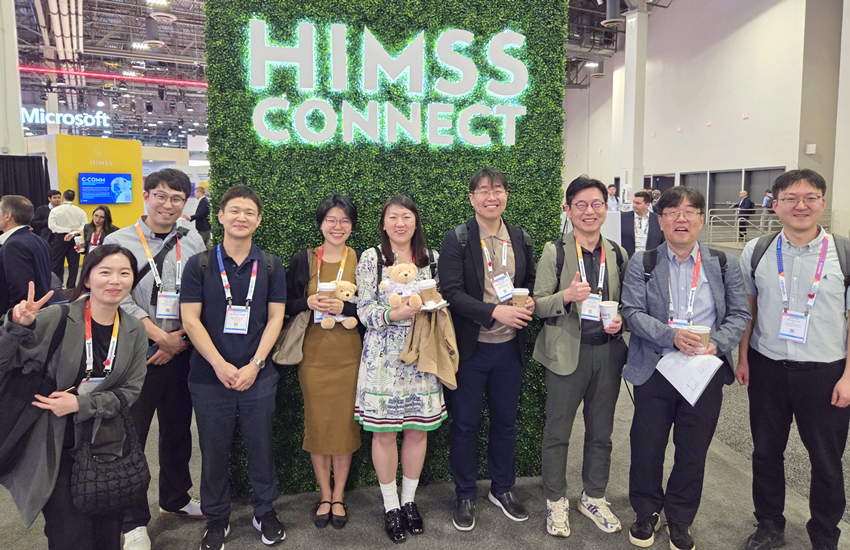
The Healthcare Information and Management Systems Society (HIMSS) Conference was held in Las Vegas for four days starting March 9, marking the largest event in its history with more than 1,200 global companies participating. Unlike the technology showcase driven exhibitions that dominated just a few years ago, the conference demonstrated how AI is creating tangible value in clinical settings, signaling its transition into real world implementation.
At a forum held ahead of the conference, in depth discussions focused on how to effectively integrate AI into real world clinical practice. Jane Moran, Chief Information and Digital Officer at Massachusetts General Brigham, noted that “healthcare AI has moved beyond the pilot phase and is now entering an early scaling stage,” emphasizing that the key to successful adoption lies not in the technology itself, but in workforce training and the management of high quality data. The Centers for Medicare and Medicaid Services (CMS) underscored the importance of interoperability to break down data silos across hospitals, highlighting the need for standardized data quality metrics.
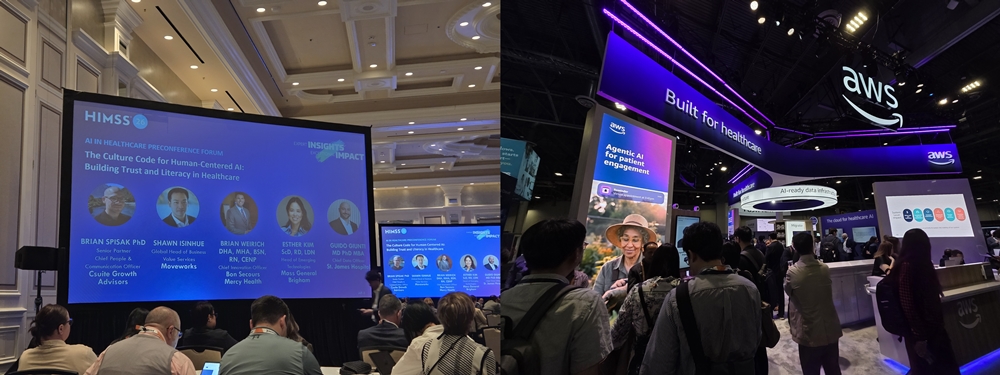
In a keynote address, Mayo Clinic introduced the “Mayo Clinic Platform,” a collaborative initiative involving 130 companies and global hospitals that enables the sharing of data from 54 million patients. Rather than relying on a central server, the platform adopts a peer to peer (P2P) structure in which each institution retains its own data while participating in collaboration. By maintaining consistent data standards across different cloud platforms and technologies, the system ensures interoperability across all environments, offering a notable example for Korea, where data security and regulatory requirements are particularly stringent.
Meanwhile, Apple presented a vision for preventive care in which biometric signals are used to detect early signs of disease and prompt timely medical attention. The strategy focuses on managing patients’ daily lives even before they enter the hospital, strengthening the connection between patients and care providers. The session also offered a glimpse into a future healthcare environment where hospitals and patients are more closely connected in everyday life, aligning with ongoing initiatives such as the activation of Patient Reported Outcome Measures (PROMs) and the integrated care system for older patients with complex conditions, WithONE.
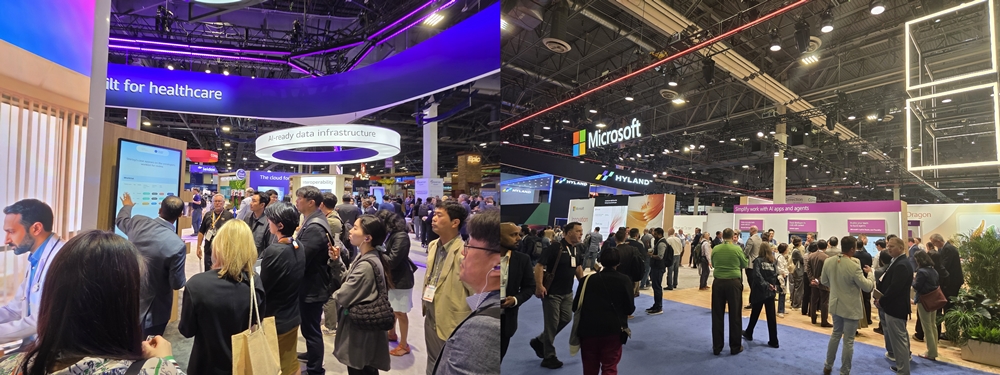
At the booths of global big tech companies, the rapid advancement of AI agents stood out. Microsoft and Oracle showcased AI agents capable of analyzing patient conversations in real time to automatically generate clinical documentation, as well as handling research summarization, revenue analysis, and insurance claims processing. Epic Systems, the largest healthcare software provider in North America, drew strong interest by demonstrating its “Agent Factory” platform, which enables clinicians to build AI tools tailored to their specific needs. Meanwhile, AWS and Google introduced large scale cloud platforms for healthcare data analytics compliant with the Health Insurance Portability and Accountability Act (HIPAA), highlighting robust security and governance capabilities.
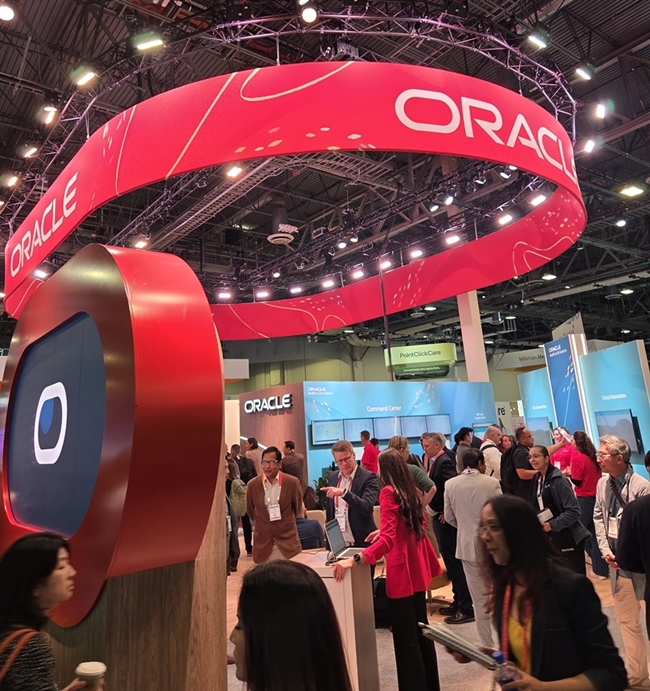
The conference demonstrated that healthcare AI has evolved beyond a simple tool to become a collaborative partner for clinicians. It is delivering value by advancing in ways that enhance both patient safety and clinical efficiency. Insights gained from this visit will inform efforts to adopt agentic AI and establish robust security governance, with the goal of providing safer care for patients and a more efficient clinical environment for healthcare professionals.