As the population ages, the number of patients with thyroid cancer who are not suitable candidates for surgery due to poor heart or lung function or a history of multiple surgeries has increased. To provide effective treatment options for these patients, one physician has shared and taught the procedure to doctors around the world. He is Professor Jung Hwan Baek of the Department of Radiology at Asan Medical Center, a leading expert in radiofrequency ablation for thyroid tumors.
Radiology is commonly known as a medical specialty that interprets and diagnoses various imaging examinations, including computed tomography (CT) and magnetic resonance imaging (MRI). However, the Department of Radiology at Asan Medical Center also performs various interventional procedures for treatment, including radiofrequency ablation using advanced imaging technologies.
Professor Baek has performed more than 7,000 thyroid radiofrequency ablation procedures and trained over 600 international medical professionals in the technique. We met with Professor Baek, who is leading the advancement of thyroid diagnosis and radiofrequency ablation worldwide, to hear about his experiences in treating international patients.
International patients often seek treatment abroad because they may have difficulty receiving appropriate care in their home countries or face limitations in medical infrastructure. For patients who have traveled a long way to receive treatment, the most important responsibility of medical professionals is to provide accurate diagnoses and effective treatments. The accuracy of diagnosis and treatment depends on the medical team’s expertise and knowledge of the disease. Therefore, I continue to study and expand my knowledge so that I can provide international patients with the most accurate diagnoses and the best possible treatment options.
What is your area of expertise?
Although interest in non-surgical treatments has increased, there had been no effective treatment options for thyroid tumors other than surgery. As the elderly population grew, the number of patients who faced higher surgical risks or were unable to undergo surgery increased, creating a need for alternative treatments that could treat thyroid tumors without surgery. This led me to begin research in this field. In 2002, I successfully performed the world’s first radiofrequency ablation for a benign thyroid tumor and have performed more than 7,000 procedures to date.
Thyroid radiofrequency ablation is performed without an incision, leaving no scars and preserving normal thyroid function. Because the procedure is relatively simple and minimally invasive, it is highly preferred by patients. To help establish this treatment as a global standard of care, I served as the lead author of the world’s first clinical practice guidelines for thyroid radiofrequency ablation published by the Korean Society of Thyroid Radiology.
I also contributed to the recognition of radiofrequency ablation as a new medical technology in Korea by demonstrating its effectiveness in treating recurrent thyroid cancer.
Through the thyroid radiofrequency ablation training program, the AMC International Radiology Master Course (AirMC), I have trained more than 600 international medical professionals in this technique. After returning to their home countries, these physicians shared the technique with other healthcare professionals, allowing patients around the world to receive thyroid radiofrequency ablation in their own countries.
The training program, which initially focused on Asian medical professionals, gained international recognition and expanded to Europe, the United States, and Latin America. I have also been invited to deliver more than 200 international lectures. In addition, I have continued my research and published more than 400 papers on thyroid diseases and radiofrequency ablation.
Through global training programs and academic research, I have helped introduce thyroid radiofrequency ablation to the United States and contributed to the FDA approval of thyroid radiofrequency electrodes by the U.S. Food and Drug Administration (FDA).
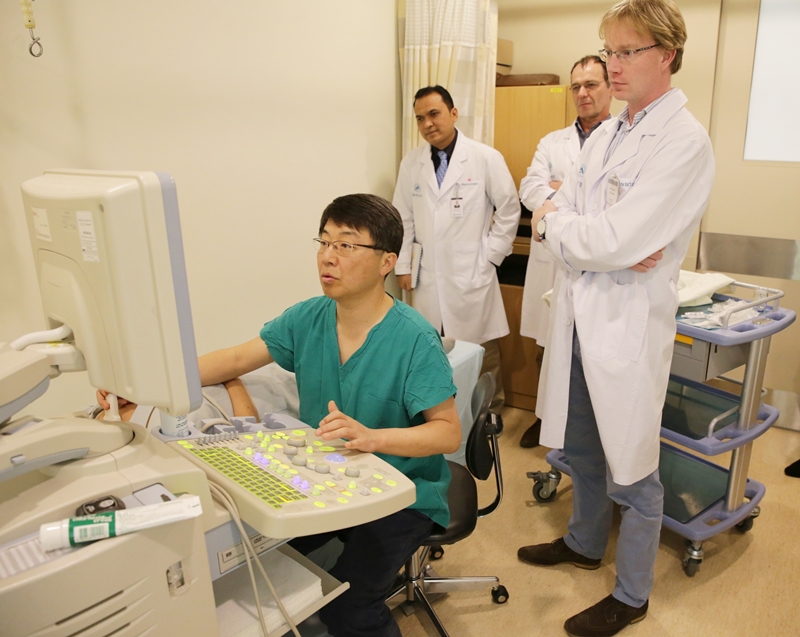
▲ Professor Jung Hwan Baek of the Department of Radiology at Asan Medical Center is explaining radiofrequency ablation to international medical professionals.
Are there any aspects you pay special attention to when treating international patients?
There are still relatively few specialists in thyroid radiofrequency ablation overseas. Most international patients I meet come to Asan Medical Center after being referred by medical professionals in their home countries. They travel a long distance based on the recommendations of their local physicians and their trust in the medical team at Asan Medical Center.
To honor the trust placed in us by these patients, I do my best throughout every stage of their treatment. My goal is to help them return to a healthy and fulfilling daily life after receiving treatment.
Is there an international patient who left a lasting impression on you?
A patient from the United States is one who remains especially memorable. One day, I received an email from a 28 year old American patient who had been treated for thyroid cancer at Mayo Clinic. Despite undergoing multiple treatments, the patient’s thyroid cancer had recurred and was searching for another treatment option when they learned about thyroid radiofrequency ablation at Asan Medical Center.
After reviewing the patient’s medical records, I determined that treatment was possible. The patient underwent three sessions of thyroid radiofrequency ablation at Asan Medical Center, and two years later, received confirmation in the United States that the cancer cells had completely disappeared.
This case was particularly meaningful because it was an example of a patient who had not been successfully treated at Mayo Clinic but was able to receive effective treatment at Asan Medical Center. It was also an opportunity to reaffirm the global recognition and excellence of Asan Medical Center’s thyroid treatment.
What has been the most rewarding aspect of treating international patients?
During the COVID 19 pandemic, international patients faced significant challenges in seeking medical care abroad. International travel was restricted, making it difficult for patients to enter Korea, and even after arrival, they had to complete lengthy quarantine periods before visiting the hospital.
In response, Asan Medical Center provided non face to face consultations for international patients. Based on medical records and test results obtained from local hospitals, we quickly assessed each patient’s condition and reviewed possible treatment options. We also collaborated with local medical teams through remote consultations to develop personalized treatment plans for patients visiting Asan Medical Center.
Providing appropriate treatment to international patients despite these challenging circumstances was deeply rewarding and meaningful.
Is there anything you would like to say to international patients?
The process of international patients visiting and receiving treatment at Asan Medical Center requires close collaboration between medical departments and related support teams. The International Healthcare Center at Asan Medical Center dedicates significant time and effort to ensuring the best possible care for international patients.
We carefully review each patient’s treatment options in advance and provide remote follow up consultations after patients return to their home countries. When international patients visit the hospital, we also offer various support services, including interpretation services and Western style meals, to enhance their comfort and convenience.
We hope international patients can trust Asan Medical Center’s well established and comprehensive healthcare system and receive treatment with confidence and peace of mind.



.JPG)
