


-
- Global AMC MENU
- NEWS
- HEALTH
- PEOPLE
- Introduction


Asan Medical Center Children's Hospital School Marks 20 Years of Supporting Children’s Education During Cancer Treatment
1,000 Children Complete Program Since Its Establishment in 2006… Helping Pediatric Cancer Patients Minimize Learning Gaps and Return to School
Operating for 20 Years Through Volunteer Support, From Personalized Academic and Extracurricular Classes to Psychological and Emotional Care
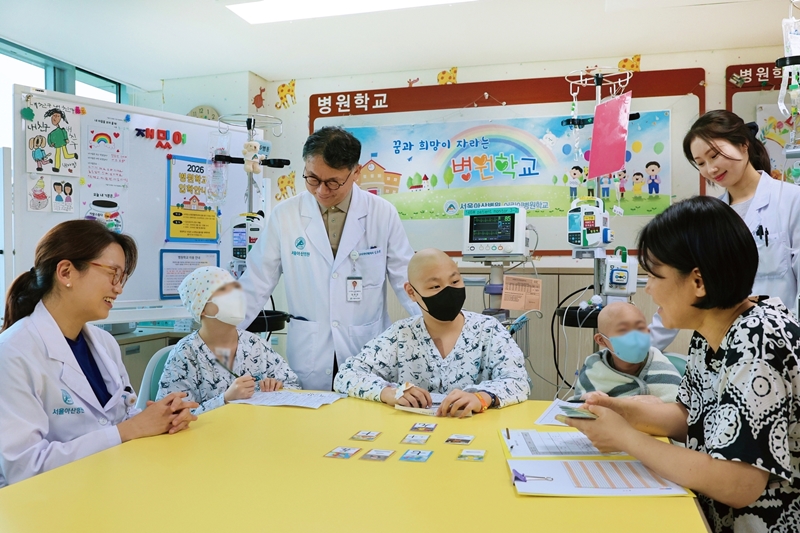
▲ President Hyery Kim of Asan Medical Center Children’s Hospital School, and President Ho Joon Im of Asan Medical Center Children’s Hospital (first and third from left), encourage pediatric cancer patients attending a Chinese character class taught by volunteer teacher Eun Jung Lee at the Children’s Hospital School.
Asan Medical Center Children's Hospital School recently marked its 20th anniversary, helping children and adolescents with cancer continue their education during prolonged treatment and return to school in good health.
Asan Medical Center Children’s Hospital (President Ho Joon Im, Professor of the Division of Pediatric Hematology and Oncology) launched the Children’s Hospital School on August 28, 2006, to help pediatric and adolescent patients receiving long-term inpatient treatment for childhood cancer, leukemia, and other blood disorders continue their studies without interruption.
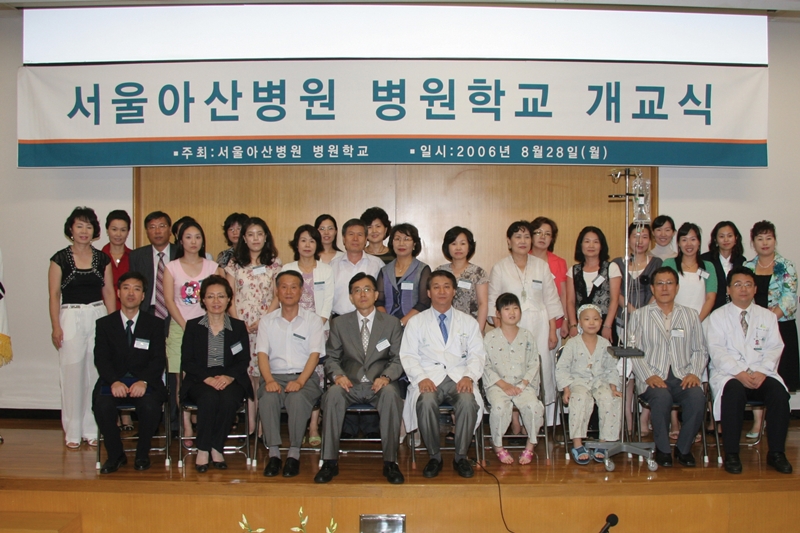
▲ The opening ceremony of Asan Medical Center’s Children’s Hospital School in 2006.
The program serves students from age seven, before entering elementary school, through high school. From 2006 to 2025, more than 1,000 children completed the Children’s Hospital School program over its 20 years of operation.
The Children’s Hospital School offers a range of academic subjects, including Korean, English, and mathematics, as well as extracurricular programs such as art, crafts, and history. All classes are provided through the voluntary contributions of current and former teachers and instructors with specialized skills. Lessons are tailored to each child, taking into account not only their grade level and school curriculum, but also their treatment schedule and physical condition on the day.
Some classes are also offered in real time through interactive online sessions for children who have difficulty attending the classroom due to infection risks or other reasons.
Through an agreement with the Gangdong Songpa District Office of Education, the Children’s Hospital School also provides academic support, including issuing certificates of course completion and operating an educational curriculum. When a child attends hospital school classes for at least one hour a day, the attendance is recognized by their regular school, helping minimize learning gaps caused by prolonged treatment.
The Children’s Hospital School’s role extends beyond helping children continue their studies. It gives children who have become distanced from their peers and school life during long hospital stays opportunities to experience everyday life as students again. The school also communicates with homeroom teachers at the children’s regular schools to help ease their transition back to the classroom.
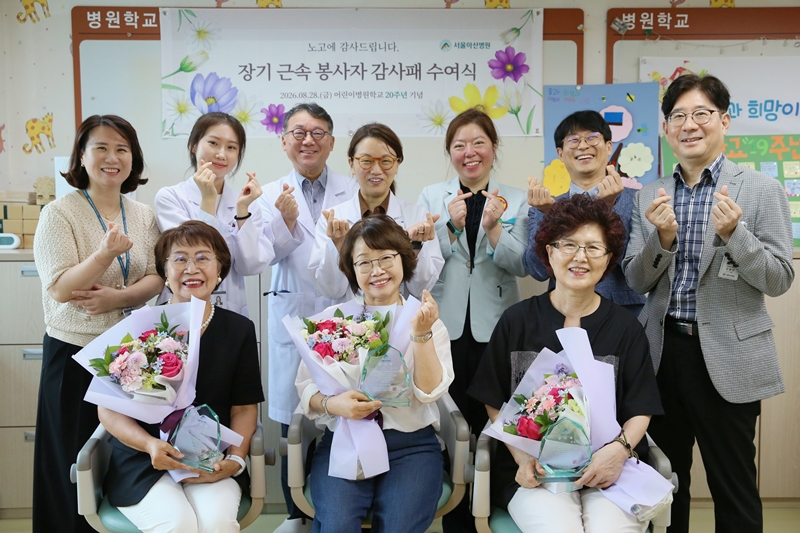
▲ Long-term volunteers (front row) and attendees pose for a commemorative photo at the appreciation plaque presentation ceremony held at Asan Medical Center Children’s Hospital School on August 28.
Asan Medical Center Children's Hospital School organized a variety of anniversary events with children, their families, and volunteers to mark its 20th anniversary.
On August 20, the lobby of Asan Medical Center’s New Building hosted an exhibition of students’ drawings, craftworks, and class photographs, along with balloon art, storybook sharing, and a magic show for children. On August 28, the school’s anniversary, appreciation plaques were presented to long term volunteers who have shared their talents to support children’s learning at the Children’s Hospital School over the years.
President Hyery Kim of Asan Medical Center Children’s Hospital School and Professor of the Division of Pediatric Hematology and Oncology, said, “The Children’s Hospital School is a place where children undergoing long term treatment can learn and experience everyday life, even if only for a short time, as students rather than patients.”
She added, “Returning to school and enjoying the ordinary routine of studying and spending time with friends is a very important goal for children. We will continue to support them so that the Children’s Hospital School can serve as a reliable stepping stone, helping them maintain their learning during treatment and return to the classroom in good health.”
ASAN MEDICAL CENTER
BROCHURE DOWNLOAD
Sharing your hope
ASAN MEDICAL CENTER
