


-
- Global AMC MENU
- NEWS
- RESEARCH
- PEOPLE
- Introduction


The System Combines MRI and Ultrasound Images to Visualize Suspicious Areas in 3D and Precisely Guide the Biopsy Needle
The Transperineal Approach Reduces Infection Risk by Minimizing Bacterial Exposure, Strengthening Precision in Prostate Cancer Diagnosis
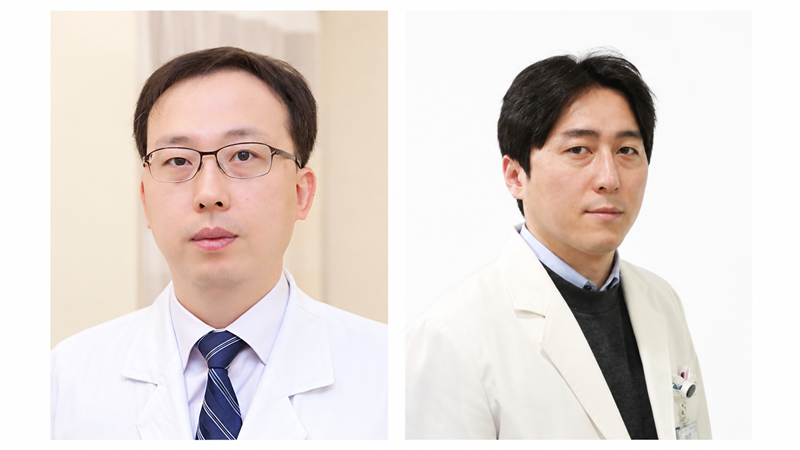
▲ (From left) Professors In Gab Jeong and Jung Kwon Kim of the Department of Urology at Asan Medical Center
Prostate cancer is the most common cancer among men in Korea. According to the 2023 National Cancer Registry Statistics, 22,640 men were newly diagnosed with prostate cancer in Korea, accounting for 15% of all cancer cases among men.
Accurate prostate cancer diagnosis requires precise tissue sampling from areas suspected of containing cancer. Traditionally, transrectal prostate biopsy has been widely performed, with tissue samples collected from multiple areas of the prostate under ultrasound guidance. However, ultrasound alone can make it difficult to clearly distinguish suspicious lesions. As a result, targeted biopsy, which uses MRI to identify suspicious lesions and fuses MRI images with ultrasound images to guide tissue sampling, has increasingly been adopted.
A team led by Professors In Gab Jeong and Jung Kwon Kim of the Department of Urology at Asan Medical Center recently introduced Mona Lisa, a robotic assisted prostate biopsy system that combines MRI imaging with robotic guidance and uses a transperineal approach. The system, the first of its kind to be introduced in Korea, is being used to enhance the precision of prostate cancer diagnosis.
Mona Lisa fuses previously acquired MRI images with real time ultrasound images to provide a three dimensional view of the prostate and suspicious lesions. Based on the fused images, physicians determine the target locations for tissue sampling, and the robot precisely guides the biopsy needle to the designated positions, controlling its direction and depth.
Unlike conventional transrectal biopsy, Mona Lisa accesses the prostate through the perineal skin between the anus and scrotum. In the transrectal approach, the biopsy needle passes through the rectal wall, potentially allowing intestinal bacteria to enter the body. The transperineal approach avoids passing through the rectal wall, thereby reducing the risk of infection associated with the procedure. The European Association of Urology also recommends transperineal biopsy to reduce infection risk.
Mona Lisa is designed to collect tissue samples from multiple areas of the prostate through two entry points in the perineal skin. Physicians determine the sampling locations and number of specimens based on the size of the prostate and the location of suspicious lesions. The system can also be used to examine suspicious lesions in areas such as the anterior prostate, which can be difficult to access using the transrectal approach.
The procedure may be considered for patients who require a prostate biopsy, such as those with elevated prostate specific antigen (PSA) levels or abnormal findings on MRI. It may also be considered, at the physician’s discretion, for patients whose previous biopsy did not detect cancer but who continue to show suspicious findings. Depending on the patient’s condition, targeted biopsy of suspicious lesions identified on MRI may be performed alongside systematic sampling of other areas of the prostate.
Asan Medical Center first introduced Artemis, a robotic assisted transrectal MRI ultrasound fusion prostate biopsy system, in Korea in 2019 and has since accumulated experience in precision diagnosis of prostate cancer. With the introduction of Mona Lisa, the hospital has further strengthened its diagnostic capabilities by combining MRI guided targeted biopsy with the advantages of the transperineal approach.
“Accurately sampling suspicious lesions and assessing the aggressiveness of the cancer are essential for determining the most appropriate treatment for each patient,” said Professor In Gab Jeong of the Department of Urology at Asan Medical Center. “By combining MRI guided targeted biopsy and precise robotic needle guidance with the transperineal approach, we aim to provide patients with safer and more accurate prostate cancer diagnosis.”
ASAN MEDICAL CENTER
BROCHURE DOWNLOAD
Sharing your hope
ASAN MEDICAL CENTER
