


-
- Global AMC MENU
- NEWS
- RESEARCH
- PEOPLE
- Introduction


A Rare Inflammatory Muscle Disease With Varied Symptoms, Making Accurate Diagnosis Challenging
Multidisciplinary Care to Improve Diagnosis, Treatment, and Complication Management, Enhancing Patients’ Quality of Life
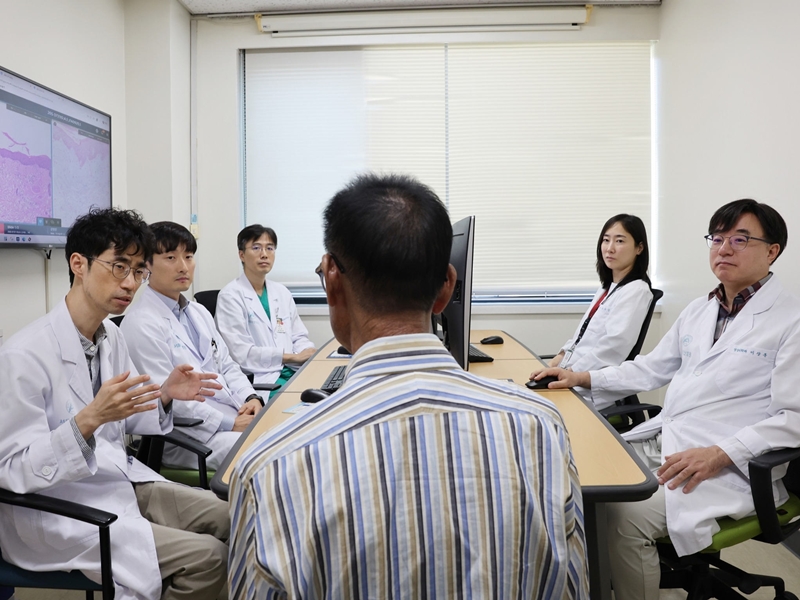
▲ Professor Seokchan Hong (first from left) of the Division of Rheumatology at Asan Medical Center and other members of the Integrated Care Clinic for Inflammatory Myositis examine a patient with inflammatory myositis.
Kim, a 50-year-old woman, experienced recurring fatigue and muscle weakness that made it difficult to carry heavy objects or climb stairs. Blood tests at a local hospital revealed elevated liver enzyme levels, prompting repeated examinations and treatment for suspected liver disease. However, no clear cause was identified. As her muscle weakness persisted, she visited Asan Medical Center (AMC) and received care at its Integrated Care Clinic for Inflammatory Myositis on the recommendation of her physician.
Kim underwent a series of tests, including autoantibody testing, electromyography, muscle imaging and muscle biopsy. Specialists from Rheumatology, Neurology, Radiology, Pathology and Rehabilitation Medicine then jointly reviewed her case. They determined that the elevated liver enzyme levels were caused by muscle inflammation and damage rather than liver disease.
After six months of immunotherapy and rehabilitation, Kim experienced improved muscle strength and a substantial recovery in her ability to perform daily activities. Her blood test results also improved.
Asan Medical Center recently announced that its Integrated Care Clinic for Inflammatory Myositis has marked its third anniversary. The clinic provides specialized care for patients with the rare disease, whose varied symptoms make accurate diagnosis and treatment challenging.
Inflammatory myositis is a rare disease characterized by muscle inflammation and weakness, affecting approximately two to four people per 100,000. Symptoms vary from patient to patient, and inflammation can affect not only the muscles but also other organs, including the skin, lungs, joints and heart.
Early symptoms primarily include muscle weakness, making everyday activities such as climbing stairs, standing up from a chair, washing one’s hair or raising one’s arms to reach objects on high shelves difficult. Depending on the organs affected, patients may also develop skin rashes, interstitial lung disease or swallowing difficulties. Certain types of inflammatory myositis may also be associated with malignancies.
Inflammatory myositis can be difficult to diagnose because its symptoms may resemble those of other neuromuscular disorders, including hereditary and metabolic muscle diseases. As the types of organ complications, responses to treatment and prognoses vary among patients, individualized treatment is essential.
At Asan Medical Center’s Integrated Care Clinic for Inflammatory Myositis, patients undergo electromyography, muscle MRI, autoantibody testing and muscle biopsy to accurately identify the specific subtype of the disease. Specialists from Rheumatology, Neurology, Rehabilitation Medicine, Pathology, Radiology, Pulmonology and Plastic Surgery work together to establish a diagnosis based on a comprehensive assessment of test results and clinical symptoms.
In addition to immunosuppressive therapy, the clinic provides individualized treatment tailored to each patient’s symptoms. Care also includes rehabilitation to restore muscle strength and physical function, assessment and treatment of swallowing difficulties, and management of interstitial lung disease.
Since opening in October 2023, Asan Medical Center’s Integrated Care Clinic for Inflammatory Myositis has treated more than 50 patients, providing comprehensive care from accurate diagnosis and individualized treatment to complication management and functional recovery. The clinic is also conducting a multicenter study to identify biomarkers for the diagnosis and treatment of inflammatory myositis as part of a project supported by the Korea Health Industry Development Institute (KHIDI).
Professor Seokchan Hong of the Division of Rheumatology at Asan Medical Center, who leads the clinic, said, “Although inflammatory myositis is a rare disease, advances in diagnostic technologies, including autoantibody testing, and a better understanding of its subtypes are making more precise diagnoses and individualized treatment possible.”
“From the diagnostic stage, it is important for specialists from different disciplines to work together and interpret test results in an integrated manner. Through the clinic, we will continue striving to ensure that patients receive accurate diagnoses, appropriate treatment and rehabilitation at the right time, ultimately improving their quality of life,” he added.
ASAN MEDICAL CENTER
BROCHURE DOWNLOAD
Sharing your hope
ASAN MEDICAL CENTER
