


-
- Global AMC MENU
- NEWS
- RESEARCH
- PEOPLE
- Introduction


Combining Highly Sensitive Biomarkers with AI to Analyze Molecular Signals in Urine, Achieving 92% Accuracy in Distinguishing Interstitial Cystitis from Overactive Bladder
AMC Research Team Led by Professor Jun Ki Kim Aims to Advance the Technology for Bladder Disease Monitoring Through Further Clinical Validation
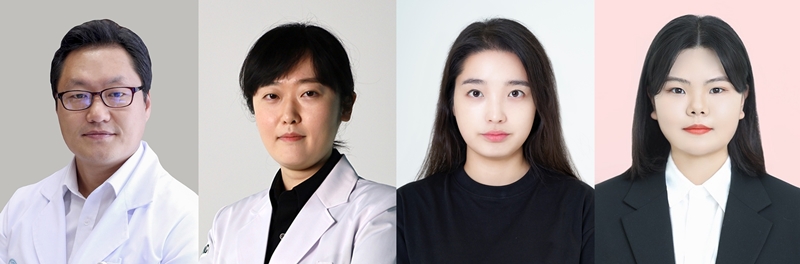
▲ (From left) Professor Jun Ki Kim of the Department of Convergence Medicine at Asan Medical Center, University of Ulsan College of Medicine; Professor Jung Hyun Shin of the Department of Urology at Ewha Womans University Mokdong Hospital; and the research team comprising doctoral candidate Minju Cho and researcher Suyeon Kang of the Department of Convergence Medicine, University of Ulsan College of Medicine.
Interstitial cystitis and overactive bladder share similar symptoms, but their underlying causes and treatments differ, making accurate diagnosis essential. However, distinguishing between the two conditions can be challenging, and diagnosis has traditionally relied on a comprehensive assessment of symptoms and medical history.
A Korean research team has developed a new analytical technology that uses artificial intelligence (AI) to analyze molecular signals in urine and accurately distinguish between different bladder conditions.
A research team led by Professor Jun Ki Kim of the Department of Convergence Medicine at Asan Medical Center, University of Ulsan College of Medicine, and Professor Jung Hyun Shin of the Department of Urology at Ewha Womans University Mokdong Hospital has developed a diagnostic technology that combines highly sensitive biomarker detection with AI to distinguish interstitial cystitis from overactive bladder, achieving an accuracy rate of 92%.
Overactive bladder is characterized by symptoms such as sudden urges to urinate (urinary urgency) and frequent urination. Interstitial cystitis, on the other hand, is a chronic condition accompanied by bladder pain or pressure. Patients often urinate more frequently to relieve the discomfort. Although the two conditions share similar symptoms, their underlying causes and treatments differ, making accurate diagnosis essential.
Currently, diagnosis is not based on a single test but involves a comprehensive assessment of the patient's symptoms and medical history, along with the exclusion of other conditions. This has highlighted the need for objective diagnostic tools to support clinical decision making.
To address this need, the research team developed a technology that combines Surface Enhanced Raman Spectroscopy (SERS), a highly sensitive biomarker detection method, with artificial intelligence (AI) algorithms to analyze bladder conditions.
First, the research team developed a SERS chip by combining gold with zinc oxide nanostructures to effectively amplify the weak molecular signals present in urine. SERS enables the identification of molecules' unique vibrational characteristics through Raman spectra while detecting subtle signals with greater sensitivity than conventional Raman spectroscopy. This allows simultaneous analysis of changes in a wide range of complex molecules in urine.
Using the newly developed SERS chip, the team analyzed approximately 5 microliters (µL) of urine from 181 participants, including 117 healthy controls, 19 patients with interstitial cystitis, and 45 patients with overactive bladder.
The researchers applied urine samples from each group to the SERS chip and compared the resulting Raman spectra. The analysis revealed distinct spectral patterns among the three groups. In particular, the regions showing higher signal intensity differed depending on the type of bladder condition.
The research team then used AI to analyze differences in Raman spectral patterns among the three groups. Multiple machine learning techniques were employed to address the limitations of individual algorithms and improve the reliability of the analysis.
The analysis using four machine learning methods (PCA-PLS-DA, PCA-LDA, XGBoost, and LightGBM) achieved a classification accuracy of up to 92%, consistently distinguishing healthy controls, patients with overactive bladder, and those with interstitial cystitis.
These findings demonstrate that interstitial cystitis and overactive bladder, which are difficult to distinguish clinically due to their similar symptoms, have distinct molecular signatures that can be identified through urine analysis.
Professor Jun Ki Kim of the Department of Convergence Medicine at Asan Medical Center, University of Ulsan College of Medicine, said, “Urine contains a wealth of molecular information, including proteins and metabolites, that reflects a patient's physiological and pathological conditions. However, analyzing these components individually has its limitations.
“This study is significant in that it used SERS to capture the complex molecular information in urine as a single spectrum and identify disease related features consistently detected across multiple machine learning algorithms. With further clinical validation, we hope this technology can be developed into a noninvasive tool for diagnosing and monitoring bladder conditions.”
Professor Jung Hyun Shin of the Department of Urology at Ewha Womans University Mokdong Hospital said, “Interstitial cystitis and overactive bladder often share symptoms such as frequent urination and urinary urgency, making it difficult to distinguish between the two conditions in some patients. We will continue our research to develop this technology into a diagnostic aid that complements existing clinical assessments.”
The research team plans to expand the patient cohort to further validate the technology's diagnostic performance. They also aim to analyze changes in urinary molecular profiles according to disease severity, clinical subtypes, and treatment status. Ultimately, the goal is to develop the technology into a platform that can not only support diagnosis but also monitor disease status and treatment response.
The findings were recently published in ACS Sensors (Impact Factor: 10.9), an international journal specializing in sensors and bioanalytical science. In recognition of the study's significance, it was also selected as a cover article.
ASAN MEDICAL CENTER
BROCHURE DOWNLOAD
Sharing your hope
ASAN MEDICAL CENTER
